

“I wasn’t even going to buy anything.”
… And 5 minutes later, you’re watching a beauty creator explain why a $2000 product has clearly changed her entire life.
… And 10 minutes later you’ve watched 7 product reviews
… And 20 minutes later you’ve added to cart
… And in some amazing how way, you’re now convincing yourself,
“It’s an investment.”
We’ve all been there.
The beauty industry has become the masters of creating our curiosity for products we didn’t even know were invented a few days ago.
A lipstick goes viral.
A blush becomes sold out.
A foundation goes in literally every other Reel.
Suddenly it doesn’t feel like ‘something that could be good to have‘, it just becomes ‘something that I need‘ desperately.
But why?
Why is just scrolling on your phone enough to want a product you didn’t have on your radar? Let’s unpack this.
You didn’t want that yesterday:
The Funny Thing The funny thing is – you were completely happy with your make-up collection yesterday.
The lipstick you have works, the blush you use is ok, your foundation still does the job.
Life was beautiful, serene, calm.
But when you opened up Instagram, some individual said: “You NEED it” and somehow, you were in awe, and instantly felt that everything in your make-up bag needed an upgrade.
Nothing about your make-up changed – but your perception of your make-up certainly has… And that is the power of beauty marketing.
You’re witnessing beauty FOMO.
FOMO (fear of missing out) is the easiest emotion to tap into the industry… The limited editions, the “last 3 items left”, sold-out announcements, new releases every 2 weeks, these all make consumers anxious.
Placing high value on something that feels temporary.
Your brain starts to whisper “If you don’t buy this now, you’ll regret it” and here you are 1:17am, with something in your cart, because of the 40 minute long life-changing blush review you just watched on your For You page.
The GRWM Effect.
GRWM videos create the illusion of real, personal connection… Somebody talking to the camera, casually explaining they just got out of the shower and are having breakfast while doing their make-up.
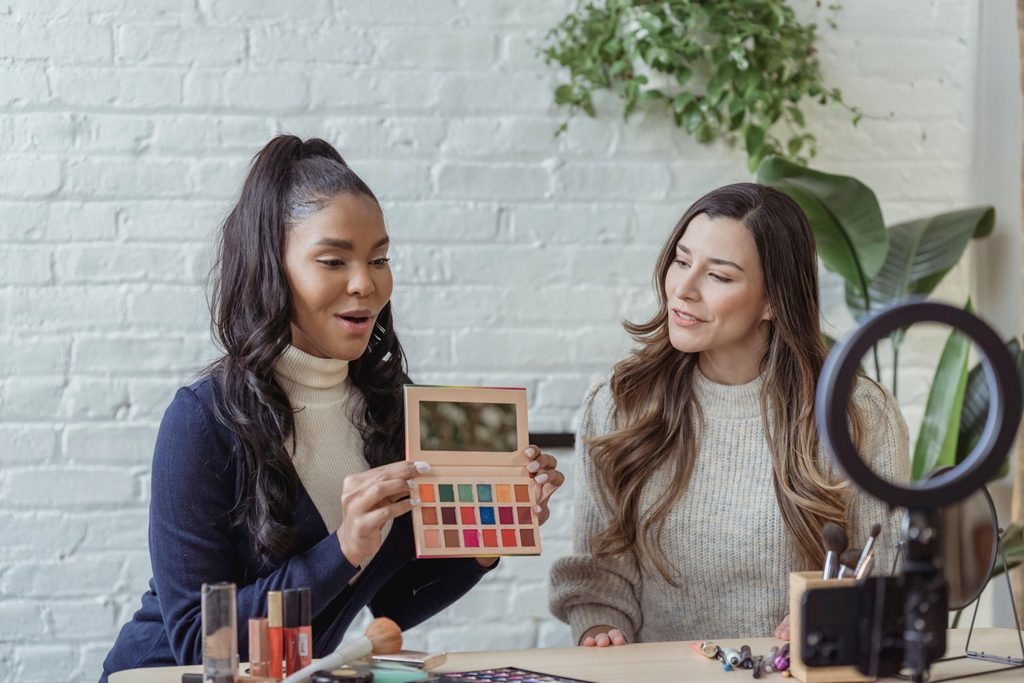
There’s no traditional sales pitching.
That is exactly why they are so effective. We’re not buying a product – we are buying the user.
The product gets associated with:
Confidence, a glamorous lifestyle, beauty, a good skin day, success, or simply a beautiful morning.
And deep down we are thinking: “Maybe if I buy it I will feel like that too“.
Of course, a blush will not bring you a whole new life.
But marketing often does not sell a product.
It sells the emotion behind the product.
Why Viral Products Seem Better
If two exactly identical lipsticks exist.
One having 10k views, another 10 million views.
Which one are you most likely to get curious about?
The second.
It’s social proof.
When so many people talk about a product, you are more likely to try it out. You start thinking: “If so many people like it, why shouldn’t I?”
Not every amazing product is viral. Not every viral product is good enough to try.
The “Holy grail” Problem in Beauty
The words “holy grail“, “obsessed“, “game changer“, “run don’t walk“, “life changing“, “my skin will never look this good“, are being overused to the point where even ordinary products begin to sound like they might be extraordinary. However: the influencer’s favorite product is still just their favorite product.
We are not everyone, everyone has their own individual skin type, needs and budget and it does not matter how expensive or luxurious it is – if it doesn’t suit us, it is not worth any value.
The Appeal of Aesthetic Packaging
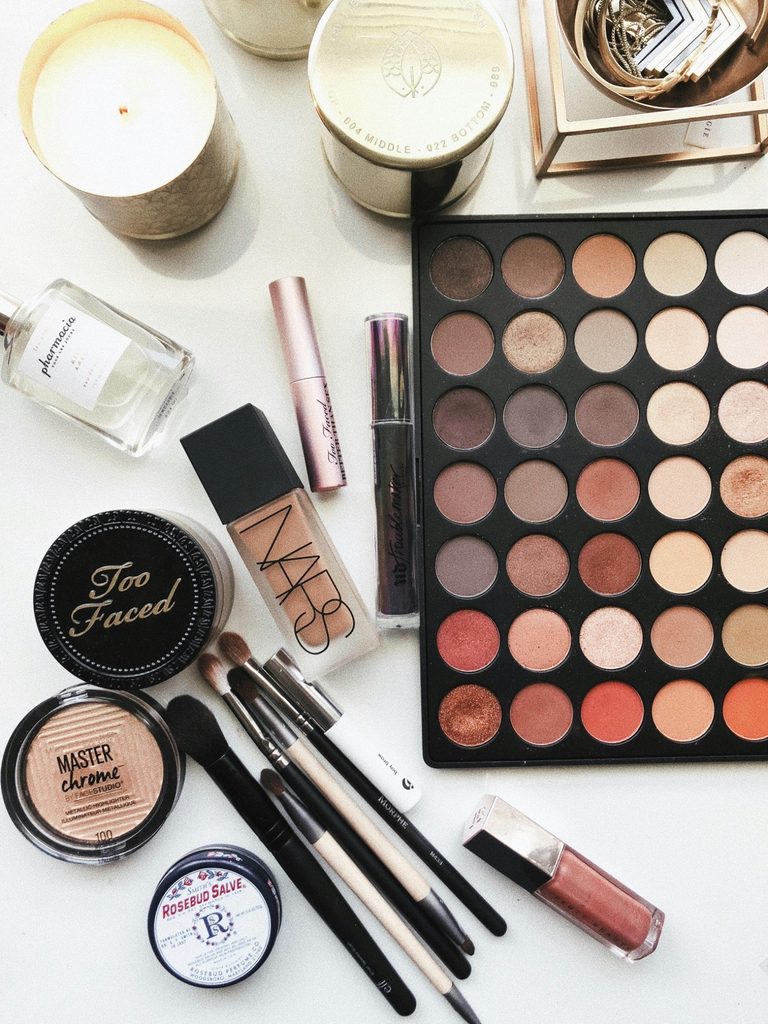
Let’s be honest, sometimes we choose a makeup product purely because the packaging is stunning. This is not something you should feel bad about, after all beauty has to be visually pleasing as well, but ask yourself: Would I buy it in a plain black tube?

If not, you may be buying a look not a product.
Your Makeup Bag – A Museum of Desires
That product you purchased six months ago, fully convinced that you will use it every single day? It’s at the bottom of your makeup drawer next to another lipstick, next to another blush, next to another foundation from when a new foundation hit the market.
Your makeup bag is turning more into a museum of goods you once longed for. Want and need are different feelings.
The 48-Hour Rule
Here is a very simple tool to stop impulsive purchases.
When you see a product you absolutely crave add it to your wishlist then do not purchase it, but wait for 48 hours. If after this amount of time you are still convinced that you can’t live without it, properly research it: ingredients, color range, the reviews, its price and compare it with your makeup stash as well as think if you will actually be able to use it and not just let it decorate your drawers for another few years to come.
The “One In, One Out” Rule
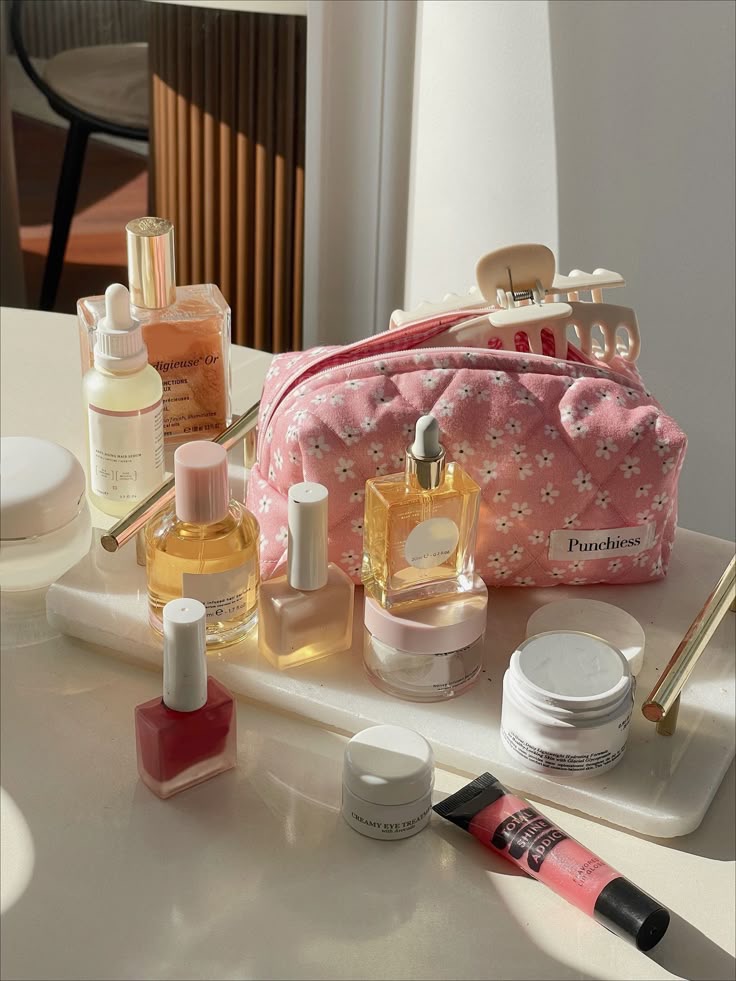
When assembling a massive makeup collection it’s a good idea to also bring in the “one in, one out” rule. If you buy a new makeup item, check your stash for similar products then try out older products if you own something similar or consider why you can’t use two of such similar products together. How many nude lipsticks can one realistically own? (No answer should be given if it is a lipstick collector.)
Beauty Content Itself is Not The Enemy
This whole rant is definitely not about influencers and beauty creators. On the contrary, beauty creators are amazing resources for discovering new trends, new brands or even new techniques of applying your makeup which eventually helps us and improves us in doing so.
Watching them is not the actual problem.
The issue is in blindly consuming the information which they share with us.
Think about them as an educational resource not about someone to create the shopping list from.
Shop Smarter
The next time the Internet talks about a new viral makeup product just before buying ask yourself at least five important questions:
1. Wanted it before seeing it online?
2. Already own something similar?
3. Will I really use it?
4. Fits into my budget?
5. Would I buy it if no one talked about it?
This question #5 alone is extremely effective.
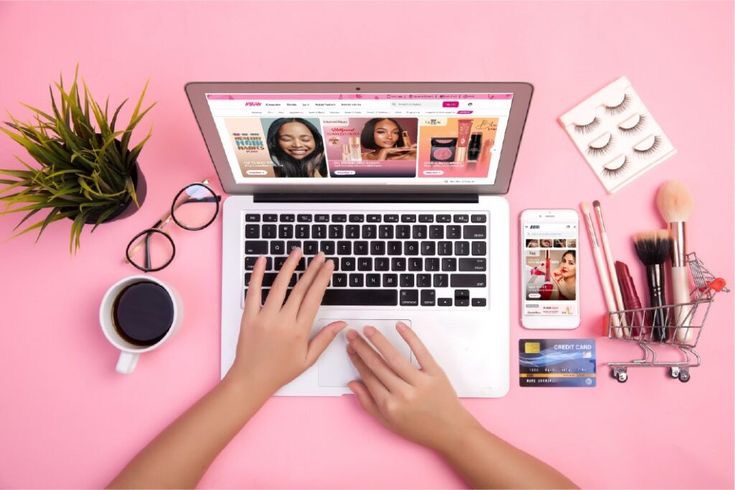
Your Makeup Bag is NOT Your Personality
Having a big makeup bag full of all the latest high-end cosmetics is no better nor worse than a minimalist lover having only a few products in his or hers.
The size of your makeup bag never implies your beauty, style or how much of a woman you are. You don’t need the newest drop to feel like part of beauty culture, you don’t need a bag of luxury brands, and certainly you don’t need to feel inadequate because someone is bragging about their latest PR package.
A Final Thought
The next time that Instagram tries to convince you of the dire need for one more blush. Just pause. No, this doesn’t mean you can’t ever buy a new makeup item.
But you have to know if it is the product or if it’s the idea being sold.
Beauty is supposed to be a fun activity, do what you love but don’t let the algorithm confuse you into thinking you don’t need a lipstick you already own because of this brand new drop.
At Flawesshly we believe that a purchase should not just be viral, it should be well loved and used!

FAQ’s –
Here’s a breakdown of your cosmetic cravings:
- When you notice a cosmetic item again and again on your Instagram feed, what is causing you to suddenly develop a desire for it?
Ans- The familiarity and popularity you associate with the product can make it more desirable. Coupled with seeing credible creators, great reviews, and other people using it, social proof will enhance your need for the product. Hence, an item you never cared about yesterday will instantly become a must-have today.
- When is there a genuine demand for the beauty product that has gone viral?
Ans- Just ask yourself one simple question: ‘Would I still want it if I’d never seen this on social media?’. Another advice is to give yourself forty-eight hours before you buy the product, read the reviews and compare the item to products that are already available. In this way, if you still want the product it is likely the purchase is conscious.
- When would a beauty creator overstate its beauty?
Ans- Creators use different lighting sources, cameras, different editing and filters, even good methods of application. While not all creators exaggerate the performance and texture; some may just love the product very much while others will be working for certain brands. Any review you watch could be beneficial, but you should always conduct your own research and then try to use the product by yourself.
- Does using viral makeup necessarily mean you made a mistake?
Ans- Certainly not! What has gone viral and become popular should undoubtedly perform quite well too. The issue is only with acquiring cosmetics due to their huge publicity, and they have no purpose for you, apart from the fact they are popular right now among most of your friends. Nevertheless if you have been wanting the product and if they fit your budget and needs, it’s totally okay to go for it.
- Why do you end up having a huge stock of makeup that you rarely use?
Ans- Thanks to the cosmetic market, trends, impulse purchases and all the limited editions being released, you can find yourself collecting items on inspiration rather than on demand. So eventually what appears as a great purchase on social media may come off as a waste when it ends up not fit for daily use among your vast collection of makeup.